What Your Lawn Is Trying to Tell You About Lawn Fertilization in Furlong, PA
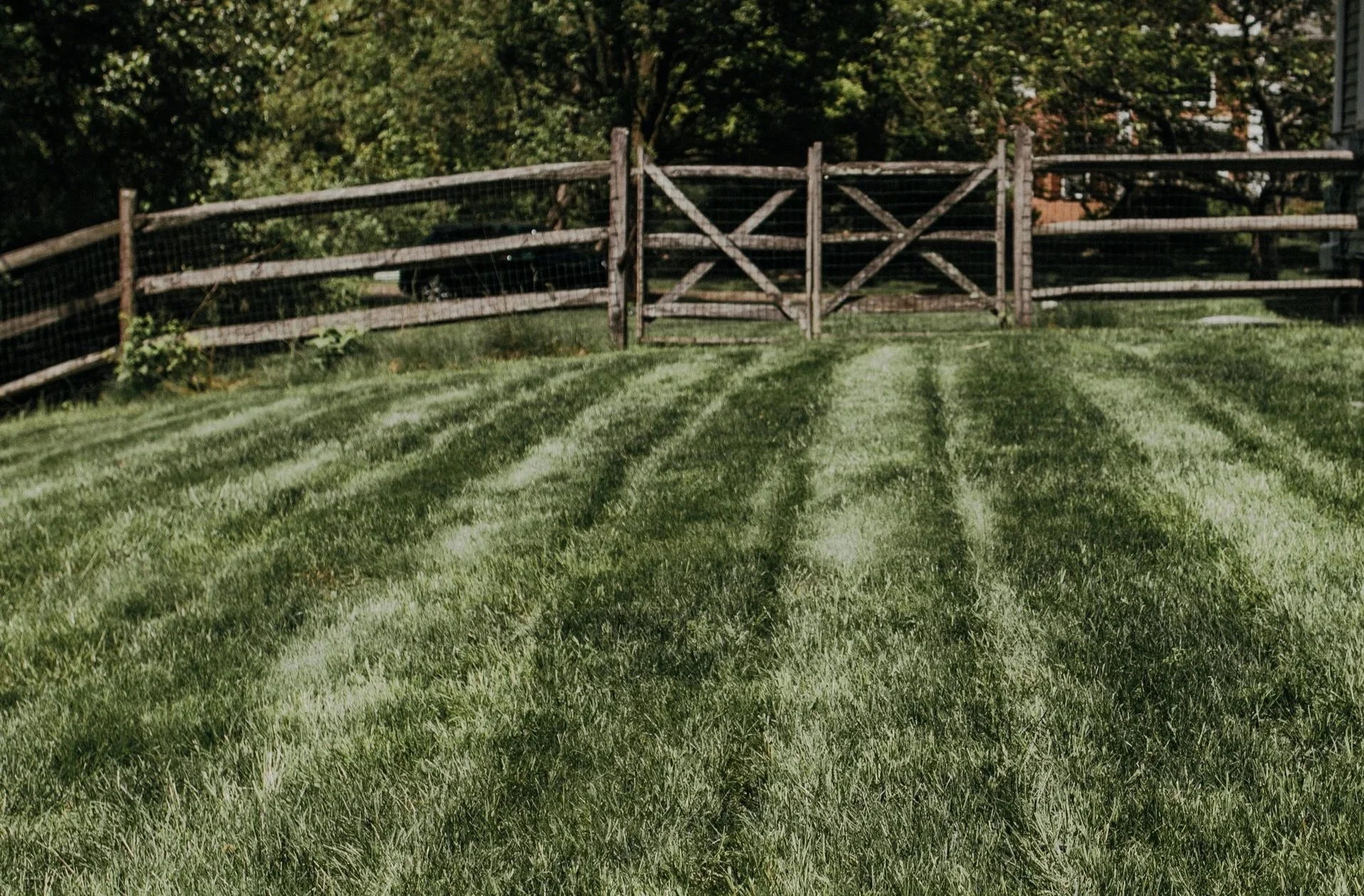
Your lawn communicates. Not with words. With color. With density. With the way it bounces back after a weekend of foot traffic or the way it does not. With the patches that show up every spring in the same places. With the weeds that keep returning, no matter how many times you pull them. With the way it looks good in May and exhausted by August.
Every one of those signals is telling you something about what is happening in the soil. And in most cases, the answer is not more water or a different mowing schedule. The answer is that the lawn fertilization program is either missing, incomplete, or out of sync with what the turf actually needs.
In Bucks County and Montgomery County, where the soils vary, the seasons are distinct, and the expectations for residential landscapes run high, a turf management approach that guesses at what the lawn needs will always produce inconsistent results. The lawns that look healthy year after year are not lucky. They are managed. And the management starts with a fertilization program that was designed for the conditions on the specific property.
Related: Lawn Aeration vs. Lawn Fertilization: Key Differences for Pipersville and Doylestown, PA Lawns
Why Timing Matters More Than the Product on the Shelf
The fertilizer aisle at the home improvement store is designed to make things simple. Buy this bag. Apply it now. Your lawn will be green. And to a point, that works. A general purpose fertilizer applied in April will green up a lawn. But it will not address the underlying conditions that determine whether the lawn holds that color through July or loses it by June.
Lawn fertilization in this region follows a rhythm dictated by the biology of cool season grasses, primarily Kentucky bluegrass and fescue blends, and the climate that shapes their performance.
The seasonal program breaks down into distinct windows:
Early spring is for a light application that supports green up and initial root development without pushing excessive blade growth. The goal is to wake the turf up gently, not force it into overdrive before the root system is ready.
Late spring is the primary growth window, when a balanced fertilizer paired with broadleaf weed control builds the density and color that carry the lawn through summer. This is the application that does the most visible work, and its timing needs to coincide with the turf's peak nutrient uptake.
Summer applications should be reduced or eliminated entirely for cool season grasses. The turf naturally slows down during heat. Pushing nitrogen during July and August creates soft, rapid growth that is more susceptible to disease, drought stress, and mowing damage.
Early fall is the most important fertilization window of the year. The soil is still warm. The air is cooling. And the turf is shifting its energy from blade growth to root development. A fall application that targets the root system builds the density and the stored energy that determine how the lawn performs the following spring.
Late fall is for a winterizer application that feeds the roots after the final mow. This product is stored in the root zone through dormancy and fuels a faster, stronger green up when temperatures rise in March and April.
Each of these applications builds on the previous one. Skip the fall window and the spring green up suffers. Overapply in the summer and the turf weakens heading into the most productive months. The program works when every step is in the right place at the right time.
What the Soil in Bucks and Montgomery Counties Actually Needs
The single most underused tool in residential lawn care is a soil test. It costs very little. It takes a few minutes to collect the sample. And it provides the data that every fertilization decision should be based on.
In this region, the soil conditions vary significantly. Properties in the northern and western portions of Bucks County, around Doylestown, Pipersville, and Upper Makefield, tend to have heavier soils with more clay content. Clay holds nutrients well but drains slowly, compacts easily, and restricts root depth. Properties closer to the suburban corridor through Warrington, Spring House, and Blue Bell may sit on fill from construction that is different from the native soil profile, creating layered conditions that affect both drainage and nutrient availability.
A soil test reveals pH, which in this area often leans slightly acidic. Cool season grasses perform best in a pH range of 6.0 to 7.0. A lawn growing in soil with a pH of 5.5 will not respond to fertilizer the way it should because the acidity is locking up nutrients in the soil and preventing the grass from absorbing them. In that case, lime is the first step, not fertilizer.
The test also reveals phosphorus and potassium levels, organic matter content, and the soil's cation exchange capacity, which indicates how efficiently the soil holds and releases nutrients to the plant. That data shapes the product selection, the application rate, and the overall approach.
A lawn fertilization program built from a soil test feeds the lawn what it actually needs. A program built from a bag label feeds the lawn what the manufacturer assumed it needed. The difference shows up in the results.
The Environmental Side of Getting Fertilization Right
There is a responsible dimension to lawn fertilization that goes beyond turf performance. Excess nutrients that wash off a residential lawn enter storm drains, streams, and the waterways that connect every property in Bucks and Montgomery counties to the larger watershed. Nitrogen and phosphorus that reach those waterways feed algae, degrade water quality, and harm aquatic ecosystems.
A fertilization program that applies the right product at the right rate at the right time minimizes that risk. Slow release nitrogen sources feed the grass gradually, matching the rate of application to the rate of uptake so that less product ends up in the runoff. Phosphorus is applied only when a soil test confirms a deficiency, not as a default ingredient in every application. And the timing of each treatment accounts for weather patterns and soil absorption rates to reduce the likelihood of product being washed off the property before the turf can use it.
This is not a compromise between lawn health and environmental responsibility. A well managed lawn absorbs more nutrients, produces denser turf, and sends less runoff downstream than an overfertilized one. The greenest lawn and the cleanest watershed are the same goal, approached from the same set of practices.
Related: Transform Your Outdoor Space: Expert Lawn Care Services in Montgomery County, PA
What NPK Means and Why the Ratio Changes With the Season
Every fertilizer product carries a three number ratio on the label representing the percentage of nitrogen, phosphorus, and potassium in the formulation. Understanding what each nutrient does helps homeowners evaluate whether the product they are applying actually matches what the lawn needs at that point in the season.
Nitrogen drives green color and blade growth. It is the nutrient cool season grasses consume in the largest volume, and it is the one most likely to be deficient in soils that have not been amended. But excess nitrogen creates rapid, soft growth that the root system cannot sustain. The rate matters as much as the presence.
Phosphorus supports root establishment and is critical during seeding or sodding. Once a lawn is established, phosphorus needs are typically low, and many properties in this region already have adequate phosphorus levels in the soil. Applying more without testing first is wasteful and contributes to the nutrient loading in local waterways.
Potassium strengthens cell walls and improves the turf's ability to handle stress from heat, cold, drought, and disease. It plays a particularly important role in the fall applications that prepare the lawn for winter dormancy and the demands of the following spring.
The right ratio shifts with the season. A spring application may lean toward nitrogen. A fall application may emphasize potassium. A late fall winterizer may use a slow release nitrogen paired with higher potassium. These are decisions that should be informed by the soil test and the seasonal biology of the grass, not by the largest number on the bag.
How Fertilization Works With Everything Else
Fertilization does not work in isolation. It is one component of a turf management system, and its effectiveness depends on how well the other components are performing.
Mowing height directly affects nutrient efficiency. A lawn mowed at 3 to 3.5 inches retains more leaf surface for photosynthesis, shades the soil to reduce moisture loss, and supports a deeper root system. A lawn cut short burns through nutrients faster and produces shallower roots that cannot access water or fertilizer below the top few inches of soil.
Aeration creates the physical pathways through compacted soil that allow water, oxygen, and fertilizer to reach the root zone. On the clay soils common in parts of Bucks and Montgomery counties, annual fall aeration is often the single most impactful service in the program. Without it, even a perfectly timed fertilizer application may sit on the surface and wash away.
Overseeding fills in thin areas with fresh grass seed, building the density that naturally crowds out weeds and reduces the need for chemical weed control. Fall overseeding, done immediately after aeration, gives the seed the best possible conditions for germination and establishment.
Irrigation timing determines whether the fertilizer reaches the root zone or sits on the blade. A light watering after a granular application dissolves the product and moves it into the soil. Overwatering pushes it through the root zone and into the groundwater. And watering in the evening creates the moisture conditions that promote fungal disease.
When these services are coordinated as a single program, the lawn compounds its gains season after season. The turf thickens. The color deepens. The weed pressure drops. And the amount of product required to maintain the lawn actually decreases as the soil health and turf density improve.
What Happens When the Program Has Gaps
The lawns that underperform in this region are rarely neglected. They are partially managed. The homeowner mows consistently. They might fertilize once or twice a year. They might spot treat weeds when they get noticeable. But the aeration never happens. The pre emergent gets skipped one spring. The fall applications get forgotten.
Each gap creates a cascade. Compacted soil restricts roots. Shallow roots cannot handle summer heat. The turf thins. Thin turf creates openings for weeds. Weeds compete for nutrients. And the fertilizer that was applied is now feeding the weeds instead of the grass.
A complete lawn fertilization program prevents that cascade by keeping every element on track. Not by doing more, but by doing the right things in the right order.
The Lawn That Improves Every Year
A green lawn is easy to achieve for a few weeks with a single application and some rain. A healthy lawn that stays dense, green, and resilient from April through November is the result of a program designed for the soil, the grass type, and the seasonal rhythms of this specific region.
For homeowners across Furlong, Doylestown, Upper Makefield, Warrington, Spring House, Blue Bell, Washington Crossing, and the communities throughout Bucks and Montgomery counties, the lawn is one of the most visible and most used parts of the property. It is the surface the kids play on. The background to every gathering. The view from every window that faces the yard.
If your lawn has plateaued, or if the same approach has produced the same mediocre results for a few seasons running, the issue is almost certainly not effort. It is the program. And the right program, built from a soil test and timed to the biology of the grass, can change the trajectory in a single season.
That is the kind of result that compounds. And the best time to start is before the next growing season asks the lawn a question it is not prepared to answer.
Related: Overcoming Lawn Care Challenges in Furlong and Bucks County, PA: Expert Solutions for Healthy Grass