Hiring an Outdoor Living Contractor in Furlong, PA: Scope, Permits, Materials and the Build Sequence
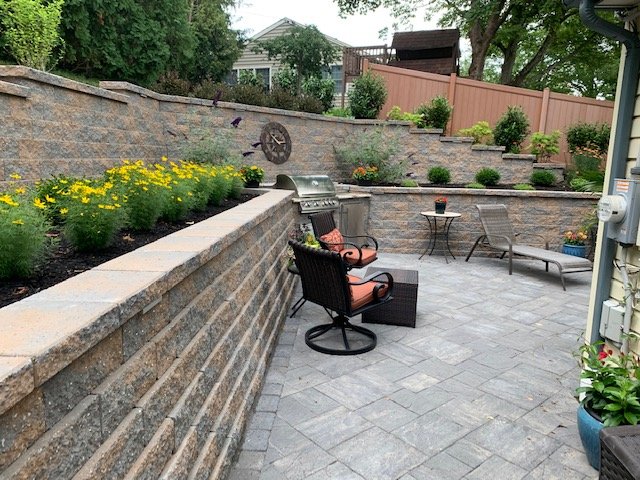
You have a sketch on your phone, a folder of saved photos, and a backyard that sheds water toward the foundation. Choosing an outdoor living contractor in Furlong, PA, settles all three at once, because the firm that draws the plan also owns the grades, the base depths and the permit set.
Our team has built patios, pergolas, outdoor kitchens and fire features across Bucks and Montgomery counties since Rob Ambler founded the company. We carry Unilock Authorized Dealer status, and our production staff includes horticulture graduates of Pennsylvania College of Technology.
What follows is the practical side of the decision: the scope a design build firm actually covers, the approvals Bucks County townships require, the materials that survive a Pennsylvania winter, and the order the trades belong in. Read it before you sign anything.
Related: Discover the Magic of Tailored Landscape Design in Solebury Township and Bucks County, PA
What Does an Outdoor Living Contractor Actually Do?
A true outdoor living contractor carries a project across four disciplines: design, site engineering, construction and planting. That combination matters more than any single skill. A mason who sets beautiful stone on a base nobody compacted properly produces a patio that telegraphs every settlement crack within three seasons.
On our projects the work starts with measurement and grades rather than material samples. We record elevations, note where roof leaders discharge, identify the low corner of the lot, and locate the septic field, well head, propane tank and buried utilities. Those findings dictate where a patio sits and how high a wall needs to be, and they are far cheaper to respect on paper than to discover mid-excavation.
From there the scope widens into structures and systems. Footings for shade structures, gas and electric rough-ins for cooking areas, low-voltage runs for lighting, subsurface drainage, then plantings and lawn restoration to close the disturbed edges. Our full service landscape design team handles the drawings and the crew list under one contract, so nobody arrives to install a pergola on a patio that was poured too thin to hold a post base.
The alternative, hiring separate trades yourself, puts you in the role of general contractor. You own the sequencing, the coordination and any gap between one trade’s finish and the next trade’s expectation. Most homeowners find that job larger than it sounds.
What Should You Ask Before You Sign With an Outdoor Living Contractor?
Ask questions that expose process rather than taste. Photographs of finished projects tell you what a firm builds. Answers about base depth, drainage and warranty tell you how long it lasts.
Questions About the Work Itself
Ask what base depth the crew installs under a patio and how the material is compacted, in lifts or all at once.
Ask where water goes after a heavy August thunderstorm, and expect an answer that names a discharge point. Ask who pulls the permits and who meets the township inspector. Ask which portions of the job stay in house and which go to a subcontractor, then ask how long that subcontractor has worked with the firm.
Questions About the Business
Ask for the Pennsylvania Home Improvement Contractor registration number, general liability coverage and workers compensation certificates.
Ask how the schedule handles rain weeks, because Bucks County gives you several. Ask what the warranty covers and for how long, specifically settlement, joint sand loss and plant material. Ask to speak with a client whose project finished three or four years ago rather than three months ago, since time is the only honest test of a base and a wall.
Our residential services team answers all of it in writing at proposal stage. A firm that resists any of those questions is telling you something useful.
Do You Need a Permit for a Patio, Pergola or Outdoor Kitchen in Bucks County, PA?
Often yes, and the answer changes by township rather than by county. Pennsylvania delegates enforcement to local building departments, so Buckingham Township, Doylestown Township, Warrington and Upper Makefield each apply their own zoning rules to the same backyard plan.
A few patterns hold across the region. Retaining walls above four feet in exposed height generally require a permit and an engineered design. Roofed structures and pergolas with permanent footings usually require a building permit. Outdoor kitchens trigger review once gas, water or electric service is involved; the electrical and plumbing work carries its own inspections. An at-grade patio sometimes clears without a building permit, then runs into zoning limits instead.
Zoning is where projects stall most often. Townships cap impervious surface as a percentage of lot area, and a large patio plus a driveway expansion pushes some properties past the threshold. Setbacks restrict how close a structure sits to a side or rear property line. Properties near a watercourse or within a stormwater management district face additional review, and homeowner associations layer their own approvals on top of the township’s.
We resolve this during design rather than after. Impervious calculations, setback lines and stormwater strategy go into the drawing set before it reaches your township, and permeable joint systems or subsurface infiltration get specified where coverage math demands them. Our Furlong landscape design work runs through these departments regularly, which shortens the review cycle considerably.
How Long Does an Outdoor Living Project Take in Furlong, PA?
Plan on four to eight weeks of design and approvals, then two to six weeks of construction for a typical single-phase backyard. A patio with a seating wall and a fire feature sits at the short end. A patio plus a covered structure, an outdoor kitchen, lighting and full planting beds sits at the long end.
The construction window is rarely the variable that moves. Township review times, utility markouts, custom material lead times and rain account for most schedule drift. Natural stone and specialty paver colors sometimes arrive weeks after a standard unit, and steel and cedar for shade structures move on their own calendar too. We price and schedule against those realities and give you a date range at contract signing rather than a single optimistic day.
Sequence also affects duration. A yard built as one coordinated project moves faster than the same yard built as four separate hires, because one crew list, one excavation mobilization and one restoration pass replace four of each.
Homeowners who phase a larger plan across two seasons still benefit from a single master design, since the phase-one grading anticipates the phase-two structure.
Related: The Secret to a Stunning Outdoor Space in Furlong, PA: Professional Paver Patio and Deck Builders
Which Materials Hold Up Through Pennsylvania Freeze and Thaw Cycles?
Southeastern Pennsylvania delivers dozens of freeze and thaw cycles between November and March. Water enters a joint, expands as it freezes, and works the assembly apart. Material selection and base construction decide whether that cycle matters.
Concrete pavers and natural stone both perform well here when the assembly underneath them is right. We install a compacted aggregate base sized to the use, a bedding course held to tolerance, and polymeric or stabilized joint material that resists washout.
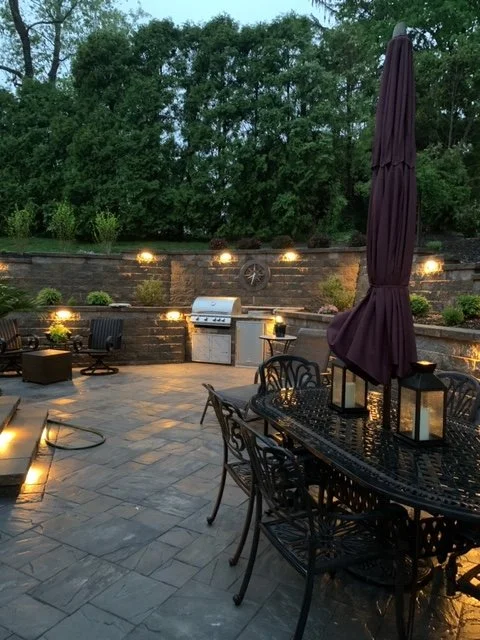
Interlocking pavers flex slightly with seasonal ground movement, which is why a properly built paver patio in Doylestown or Jamison outlasts a monolithic slab of the same age. Our Unilock dealer relationship gives us access to units engineered for northern climates, including textures with high slip resistance for pool surrounds and steps.
Structures, Footings and Fire
Anything with a post takes a footing below the local frost line, commonly set around 36 inches in this part of Pennsylvania and confirmed against the township code.
Cedar and mahogany hold up outdoors when detailed to shed water. Aluminum and steel frames carry longer spans with less maintenance. Our pergolas and shade structures get sized to the patio they cover so the proportions read correctly at eye level, not just on the plan.
Fire features need a firebox and flue detailed for the fuel, and a hearth extension that keeps embers off combustible surfaces. Gas lines run to code with an accessible shutoff. A retaining wall paired with an outdoor fireplace also solves grade change on sloped Bucks County lots, which is common on properties backing to woods.
In What Order Should a Multi-Element Backyard Be Built?
Sequence protects the finished work. Building in the wrong order means demolishing something you already paid for.
Earth and Water First
Rough grading, drainage and any structural walls come first. Pipe, stone and fabric go in while the excavator is still on site, since retrofitting subsurface drainage under a finished patio means removing the patio. Utility sleeves for future lighting, irrigation and gas get set at this stage even if those systems arrive in a later phase. Sleeves cost very little now and a great deal later.
Hardscape, Then Structures
Patios, walkways, steps and seating walls follow the earthwork. Post footings for a pergola or roof are poured with the hardscape so post bases sit correctly rather than surface-mounted as an afterthought. Cooking areas get their gas, water and electrical rough-ins before the veneer closes up the cabinet.
Systems, Then Plants and Lawn
Lighting, irrigation and appliance installation come after the masonry cures. Planting and lawn restoration close the project, because heavy equipment compacts soil and crushes plant material.
Our new home landscape restoration crews handle that final pass on new construction lots where the builder left graded fill rather than topsoil. Lighting deserves its own note: outdoor lighting doubles the usable hours of everything else in the yard, and running the wire before the beds are planted is far simpler than trenching through them later.
When Should You Start an Outdoor Living Project in Bucks County?
Earlier than most homeowners expect. Design and permitting occupy the front of the calendar, so a project intended for June enjoyment generally starts its drawings in late winter. Inquiries arriving in May typically build in late summer or fall.
Fall and winter construction works well in this region and often moves faster. Township queues are shorter, crews are more available, and hardscape installs fine in cold weather as long as the ground is workable. A patio finished in October is ready for its first full season the following spring, with the plantings established rather than newly set.
Late summer also suits planting work, and a build completed then rolls straight into leaf cleanup and winter protection under an ongoing care plan. Homeowners planning a larger property, including outdoor kitchen projects across Bucks County, gain the most from an off-season start.
Site Conditions That Shape Every Design in Furlong and Doylestown
Local ground drives more design decisions than style preference does. Clay-heavy soils across Bucks and Montgomery counties hold water and drain slowly, which puts weight on positive grade away from the house and on subsurface drainage under any large surface. Shallow bedrock shows up on plenty of lots in the area, and it changes excavation cost and wall design once the machine finds it.
Slope is the second constant. Properties that step down toward a treeline need terracing to produce level living space, and a terrace is a structural wall with a design job attached. Mature canopy is the third: shade changes plant selection, root zones limit where footings go, and a large oak often earns a design that curves around it rather than a permit to remove it.
Neighborhood context matters too. Older properties in Doylestown and Jamison carry stone details worth matching, while newer developments in Blue Bell and Warrington usually start from graded builder fill that needs soil work before anything grows well. We photograph and measure all of it during the site visit, then design to the property you actually have.
Schedule an outdoor living consultation today to see what’s possible for your backyard.
In Summary
Does one contractor really handle design, hardscape, structures and planting?
On our projects, yes. A single contract covering outdoor structures across Bucks County and the patio beneath them removes the coordination gaps where problems usually appear.
What is the single most important question to ask a contractor in Furlong, PA?
Ask where the water goes. A firm that answers with a specific discharge point has studied your lot. A firm that changes the subject has not.
How far ahead should a Doylestown or Jamison homeowner plan?
Three to five months before the season you want to use the space, which allows design, township review and construction without compressing any of them.
Is fall a reasonable time to build in Bucks County?
Generally the schedule is better than spring. Review queues are shorter, crews are freer, and the space is ready the moment the weather turns.